Two Lighthouses, One Point: Cape Henry Guards the Gate to the Bay
The 1792 tower was the young federal government's first public works project. Its 1881 replacement still flashes nightly. Together at Cape Henry, they bookend the American experiment in keeping ships alive.
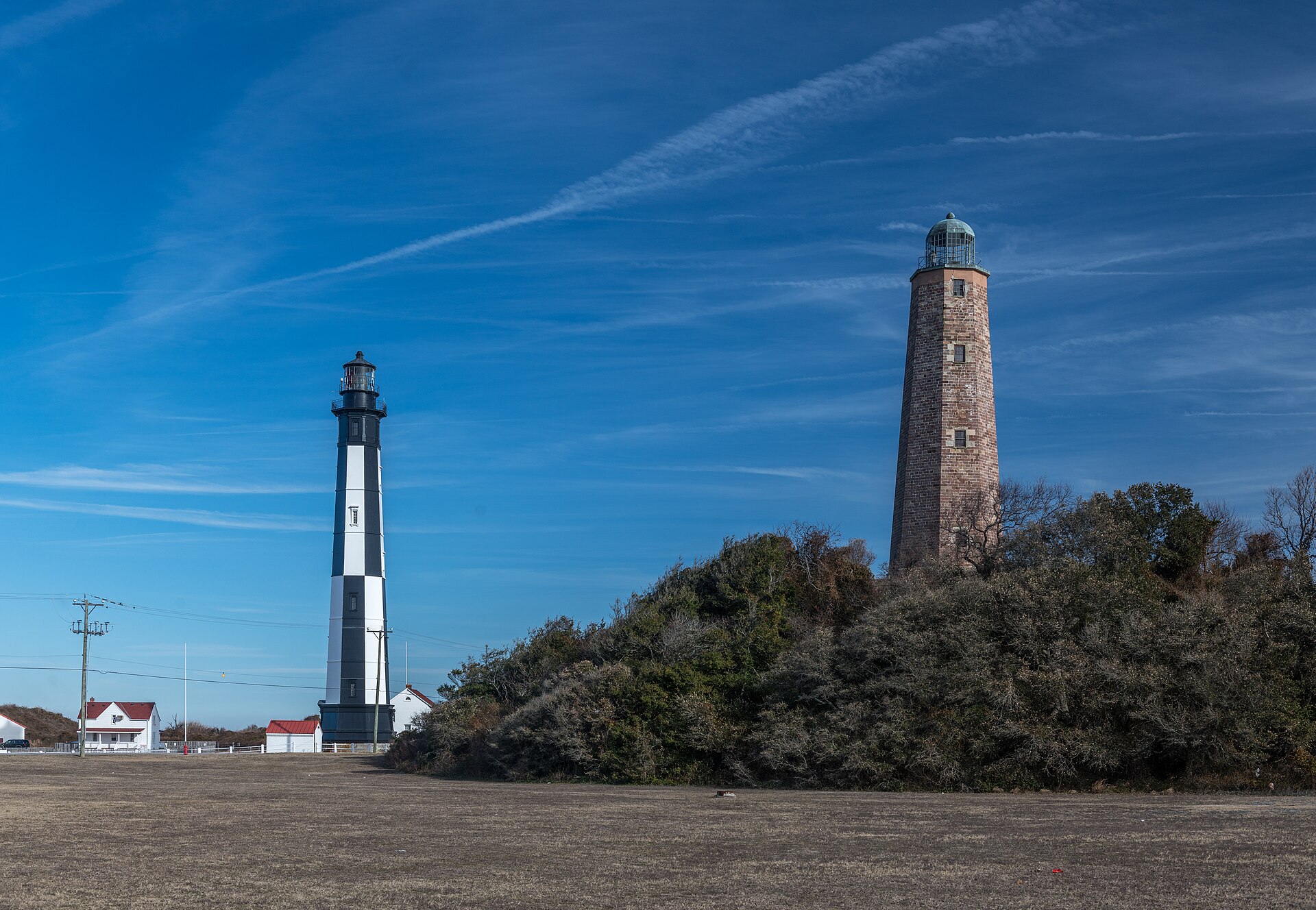
Stand at the northern tip of Virginia Beach and you can read two centuries of maritime history in a single glance. The old Cape Henry Lighthouse, a sandstone tower completed in 1792, was the first lighthouse built by the United States federal government — authorized by Congress and signed off in the Washington administration, because the mouth of the Chesapeake Bay was already too valuable, and too dangerous, to leave dark.
By the 1870s, cracks in the old tower and bigger ships in the channel argued for a replacement, and the new Cape Henry Lighthouse — 164 feet of cast iron, painted in its distinctive black and white checks — lit in 1881 and still works tonight as an active aid to navigation. The two towers, a ten-minute walk apart inside Joint Expeditionary Base Fort Story, are among the most-photographed pairs in American lighthouse history: the retired elder, open to climbers through Preservation Virginia, and the working successor still on the job.
The point they guard has deeper history still. In April 1607, the Jamestown settlers first landed at Cape Henry, planted a cross in the sand, and then sailed up the James to found their colony — the First Landing that gives the state park next door its name. The memorial cross and the lighthouses share the same wind.
Ships entering the Bay tonight will pick up the new light the way schooners picked up the old one — a fixed point in a dark world, which is all a lighthouse has ever promised and all it has ever needed to be.