Sandbridge's Borrowed Beach: The Endless, Necessary Work of Putting the Sand Back
The city's quiet southern beach survives by engineering: periodic renourishment pumps millions of cubic yards of offshore sand onto a shore the Atlantic keeps trying to take home.
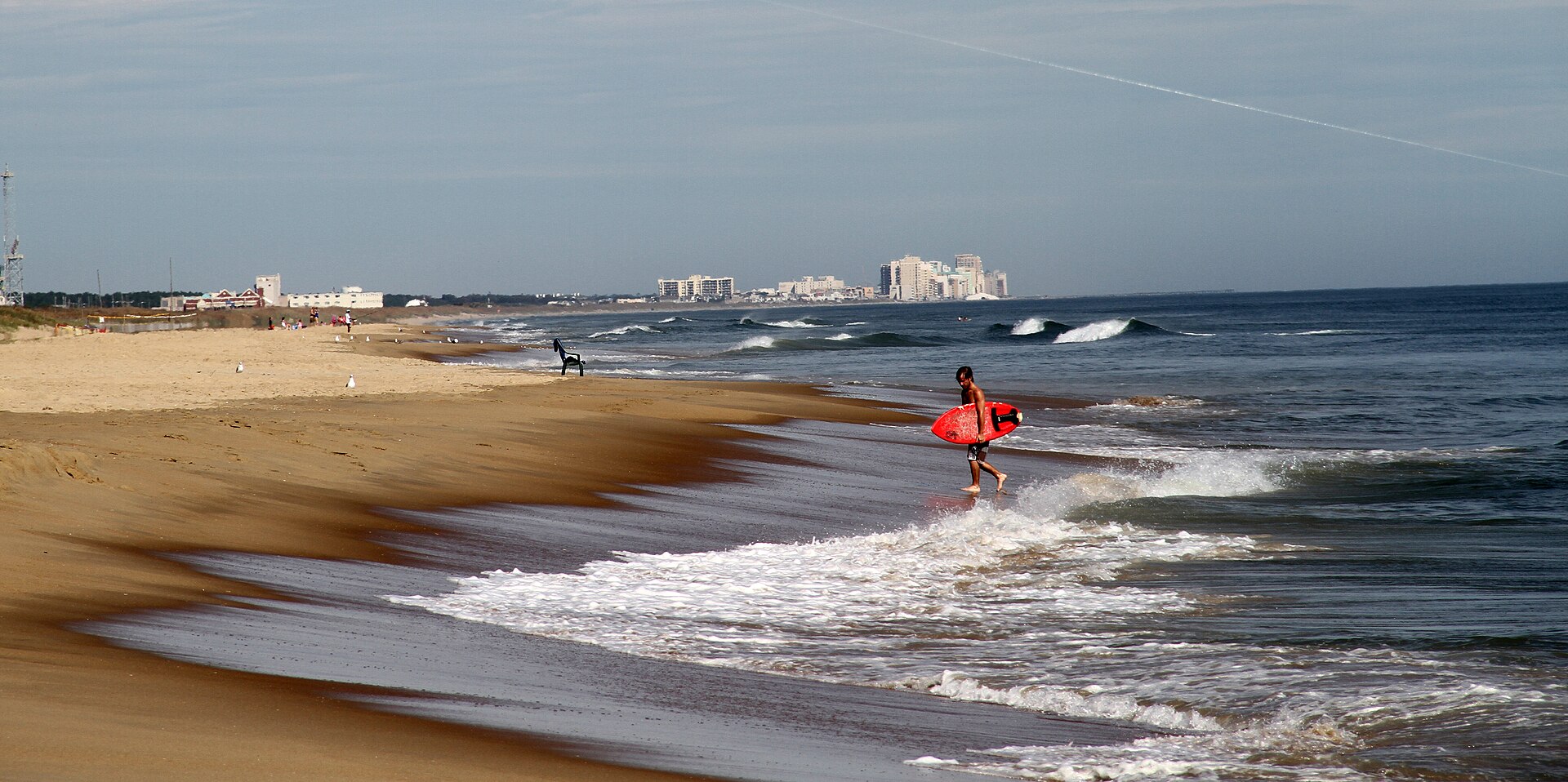
Sandbridge is Virginia Beach's other beach — five miles of cottages and dunes at the city's southern edge, no hotels, no boardwalk, a single road in. It is also a standing lesson in coastal physics: barrier beaches migrate, the Atlantic takes sand from this shore every winter, and Sandbridge exists in its current form because engineers periodically put the sand back.
The ritual is called beach renourishment, and its machinery is heroic: hopper dredges mine sand from offshore shoals, pump it ashore through miles of pipeline, and bulldozers grade the new beach to a designed profile while biologists monitor for sea turtle nests and shorebirds. The city and the U.S. Army Corps of Engineers share the cost on a cycle of roughly five to seven years — expensive, temporary by design, and cheaper than the alternative of letting the ocean negotiate directly with the cottages.
November is when the bill for summer comes due in a different currency: storm season surveys. Engineers walk the beach after the nor'easters and hurricanes, measuring how much of the placed sand moved offshore — which is, counterintuitively, partly the point, since sand that slides into the nearshore bar still breaks waves before they reach the dunes.
Sandbridge's residents have made their peace with the bargain: a quiet beach, rented to the ocean, renewed by contract. It is the whole Virginia coast's future in miniature — defended, budgeted, and beautiful, for exactly as long as the work continues.