The Sound of Freedom Has an Address: NAS Oceana and the City Around It
The Navy's East Coast master jet base occupies 5,000 acres in the middle of Virginia Beach — a working airfield older than the city itself, and the loudest, proudest fact of local geography.
You hear Naval Air Station Oceana before you understand it: the F/A-18 Super Hornets that train over Virginia Beach in a rhythm so constant the city prints 'the sound of freedom' on its welcome literature. Oceana is the Navy's East Coast Master Jet Base — roughly 5,000 acres of runways and hangars inside the city limits, home to the fleet squadrons that rotate to the carriers, and one of the largest employers in a city whose economy runs on tourism and the military in roughly equal measure.
The base predates the city: the Navy took over the site in the 1940s, when Virginia Beach was a small resort town in Princess Anne County, and the modern city literally incorporated around it. That history drives the defining land-use negotiation of local life — the city's decades-long effort, backed by state money, to buy up homes and businesses in the accident-potential zones around the airfield, keeping neighborhoods compatible with the jets and the jets politically safe from the neighborhoods.
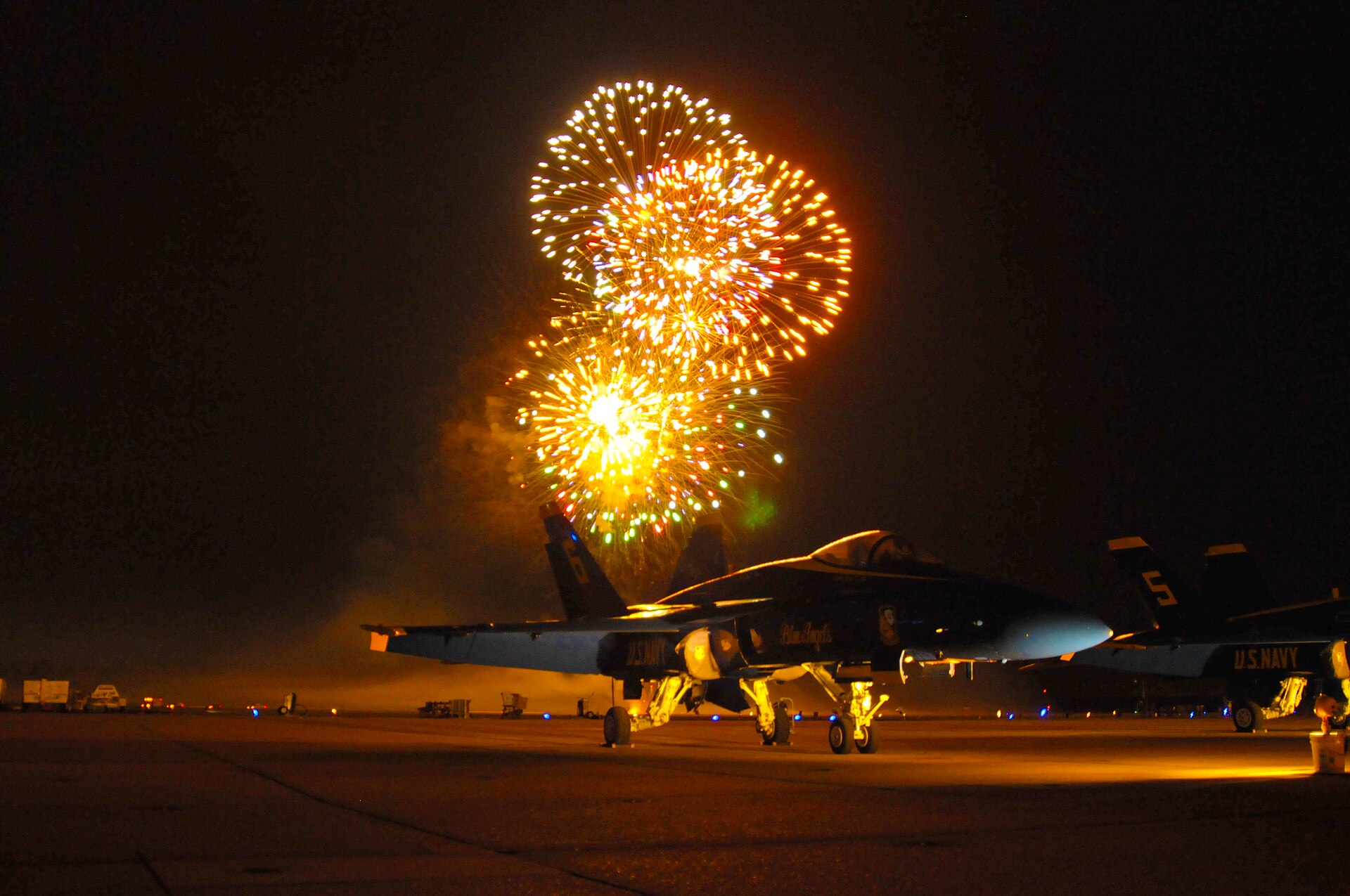
Every September, the relationship throws a party: the NAS Oceana Air Show, one of the largest in the Navy, opens the gates to hundreds of thousands of spectators for the Blue Angels and a ramp of warbirds — the base's annual argument, made in afterburner, for its place in the city.
Other suburbs complain about airport noise. Virginia Beach built the noise into its identity — which doesn't end the arguments about growth near the runways, but it does mean they are argued here as family business, and the family includes the fleet.