
A Downtown the Suburbs Built: Town Center and the Question of What Virginia Beach Becomes
Virginia Beach spent forty years as the archetypal suburb — then grew a skyline at Pembroke on purpose. Town Center's towers are the city's argument about its own future, and the argument isn't finished.
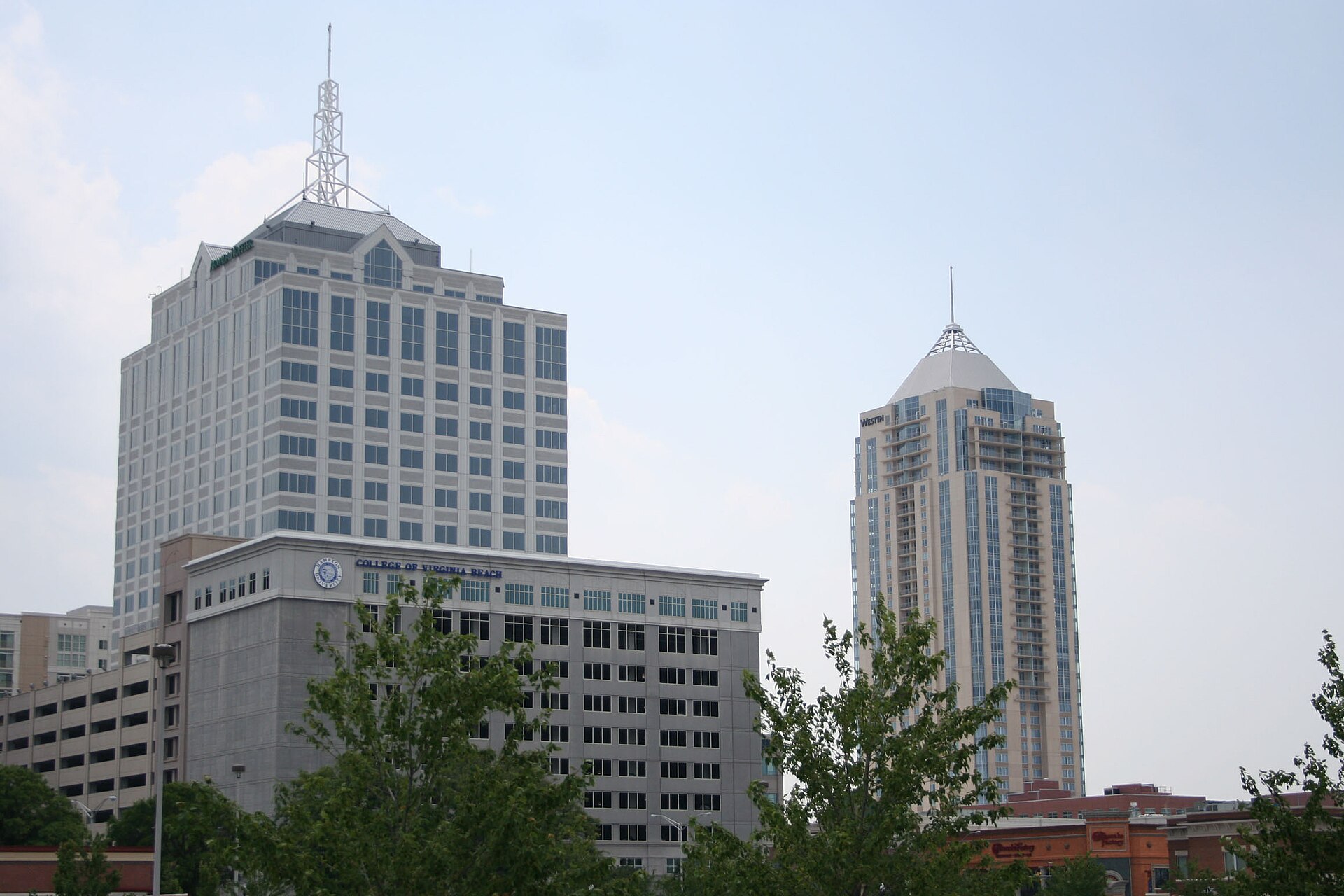
Virginia Beach was, for most of its history, a city without a center — 497 square miles of suburbs, farms, and beach, the most populous city in Virginia without a traditional downtown. Town Center, rising at the Pembroke area around Independence and Virginia Beach boulevards since the early 2000s, is the city's deliberate answer: towers, a performing arts hall, structured parking, and sidewalk dining, built to give a sprawling city a there there.
The investigation, in the civic sense, is about what comes next. Town Center's phases filled in across two decades of deals between the city and developers — public investment in garages and infrastructure, private towers in return — and each new phase renews the central questions of Virginia Beach governance: how much public money belongs in private development, how the city balances the Oceanfront's resort economy against its suburban interior, and whether a city this size can retrofit urban form onto a landscape designed for cars.
The evidence on the ground cuts both ways, which is what makes it a real debate. The district draws the region's office tenants and its anniversary dinners; it also sits in a sea of arterial traffic that no amount of urban landscaping fully disguises. Surrounding it, the strategic growth areas on the city's comprehensive plan mark the other bets — the Oceanfront, Lynnhaven, Pembroke, and the remaining farmland of the southern city, where the agricultural preserve and the suburban edge still negotiate acre by acre.
Town Center will not settle what Virginia Beach is. But it proved the city can choose a form rather than merely accrete one — and in a place incorporated as a city only in 1963, choosing is still a young habit.